
Each spring, a small shrine in Kawasaki becomes the center of one of Japan’s most talked-about festivals. Known internationally as the Kanamara Festival, this event is often reduced to novelty, but its origins and meaning run much deeper.
Held at Kanayama Shrine, the festival is rooted in Shinto beliefs surrounding fertility, protection, and prosperity. Historically, it was a place where sex workers prayed for protection from disease, and where couples sought blessings for safe childbirth and healthy relationships. Today, it continues to serve as both a local religious event and a widely attended cultural gathering.
For visitors, it offers a rare look at how tradition, symbolism, and modern festival culture intersect in Japan.
Festival Dates and Schedule
April 4, 2026
Eve Festival
The first day is quieter and more ceremonial, centered around shrine rituals rather than street festivities.
Daikon Shaving Ritual
14:00 to 15:30
A purification rite using radishes, performed in a formal setting at the shrine.
Yoimiya Festival
17:00 to 18:00
An evening ceremony marking the beginning of the festival, with a more traditional and subdued atmosphere.
April 5, 2026
Main Festival Day
This is when the festival transforms into a large-scale public event, drawing both locals and international visitors.
Sacred Fire Ritual
10:00 to 10:15
Main Ceremony
10:15 to 10:45
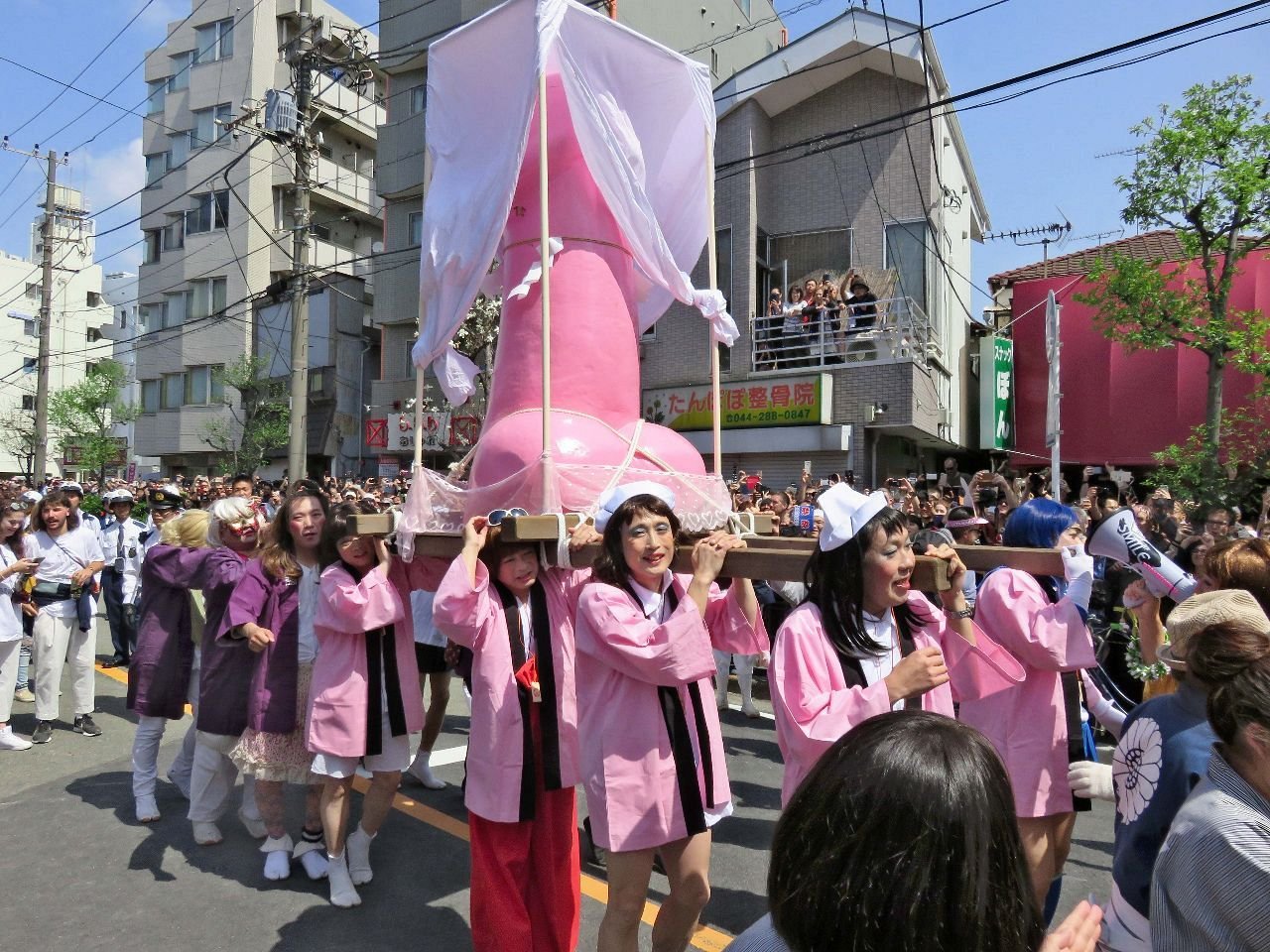
Mikoshi Procession
11:30 to 14:00
The mikoshi procession is the central highlight. Portable shrines are carried through the streets in a lively parade, accompanied by chanting, music, and a dense crowd of spectators. The procession route passes through the surrounding neighborhood and pauses at Daishi Park, which serves as a rest area and secondary gathering point.
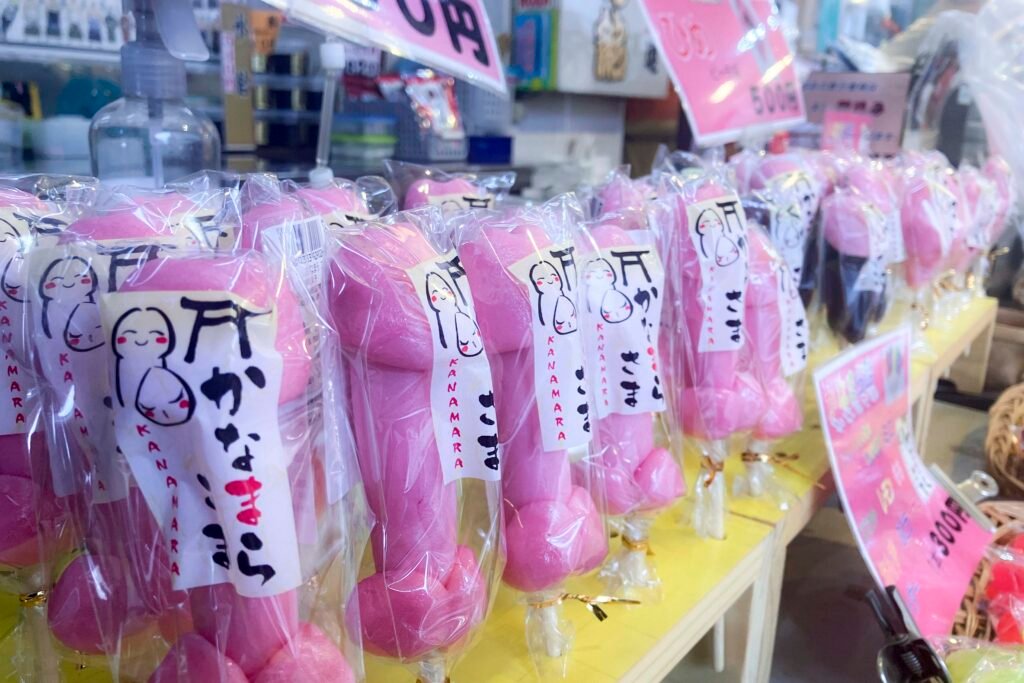
During this time, visitors can also find festival food, traditional sweets, and the well-known Kanamara candy, which is sold in limited quantities.
April 11 and 12, 2026
Kanamara Market
For those who prefer a less crowded experience, the following weekend offers a more relaxed way to engage with the festival.
Open from 10:00 to 17:00, the Kanamara Market includes:
Mikoshi displays
Vendor stalls
Designated photo areas
This portion of the event is easier to navigate and better suited for visitors interested in photography or browsing without the intensity of the main procession day.
Location and Access
The festival takes place at Kanayama Shrine in Kawasaki, Kanagawa.
Nearest station
Keikyu Kawasaki Daishi Station
From the station, the shrine is approximately a two minute walk. The surrounding area, including Wakamiya Hachimangu Shrine and the Omotesando approach, becomes part of the festival grounds during the main event.
What to Expect
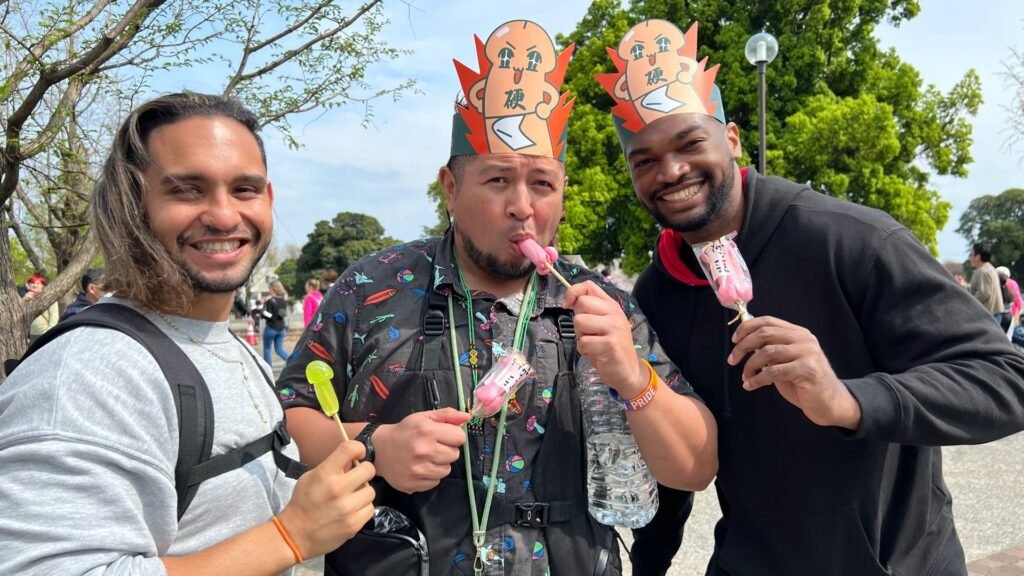
Kanamara Festival occupies a unique space between religious observance and public celebration. While its symbolism is immediately noticeable, the atmosphere is not purely comedic or irreverent. It is a functioning shrine festival, with real rituals conducted by priests and attended by local residents.
At the same time, it is one of the more accessible festivals for international visitors. The crowd is diverse, the energy is high, and the event is welcoming to those unfamiliar with traditional Japanese festivals.
That said, it is extremely crowded on the main day. Movement can be slow, and viewing the mikoshi procession often requires arriving early or positioning yourself along the route in advance.
Practical Tips
-Arrive early on April 5 if you want a clear view of the procession
-Expect heavy crowds and limited personal space
-Bring cash for food and festival goods
-Avoid bringing large bags
-Follow basic shrine etiquette when entering sacred areas
Photography is allowed, but be mindful of others and avoid obstructing the procession. Drones are not allowed.
Planning to Go
If you are interested in experiencing festivals like Kanamara Matsuri with a deeper context, navigating crowds, or combining it with other nightlife and cultural stops in the area, guided experiences can make a significant difference.
Tokyo Love District offers curated tours that go beyond surface-level sightseeing, helping you understand the culture while making the most of your time.
Contact for bookings and custom itineraries.


