
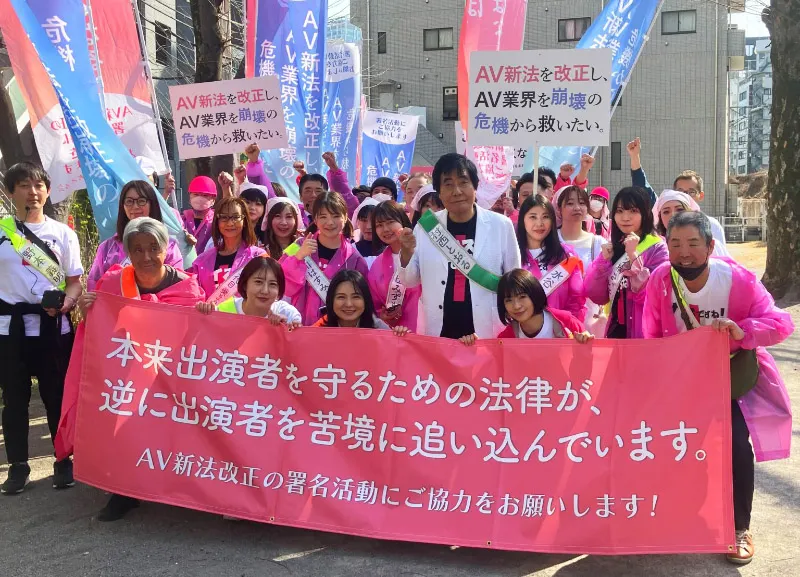
In recent years, Japan’s adult video (AV) industry has undergone one of the most dramatic legal shifts in its history. What was intended as a law to protect performers is now, according to many within the industry, pushing it toward collapse.
A growing coalition of performers, directors, legal experts, and politicians is now calling for urgent reform.
What Is the “AV New Law”?
In June 2022, Japan enacted a law formally titled:
“The Act on Special Provisions Regarding Contracts for Performers in Adult Video Productions”
Often referred to simply as the “AV New Law,” it was designed to prevent exploitation and provide stronger protections for performers.
On paper, the intent was clear:
- Prevent coercion
- Allow performers time to reconsider contracts
- Provide legal pathways for withdrawal
But in practice, the results have been far more complicated.
The 6-Month Problem
One of the most controversial changes is the mandatory waiting period between filming and release.
Before the law:
- AV production cycle: ~3 months
After the law:
- Minimum timeline: 5 months (realistically 6+ months with distribution)
This has created a massive disruption.
Studios must now:
- Carry a higher financial risk
- Delay revenue
- Avoid working with new performers due to legal uncertainty
For performers, especially newcomers, this means fewer opportunities and less stability.
Fewer Performers, Less Work
Industry voices argue that the law has had unintended consequences:
- Fewer new actresses are entering the industry
- Existing performers are losing income opportunities
- Increased hesitation from studios to produce content
In some cases, performers report being pushed out of legitimate production pipelines entirely.
A Shift Underground?
One of the most serious concerns raised by critics is the “underground effect.”
Rather than eliminating exploitation, some argue the law is doing the opposite:
- Driving production into unregulated spaces
- Increasing the risk of illegal or non-compliant shoots
- Making it harder to monitor working conditions
This is particularly concerning when it comes to independent or “doujin” AV, where oversight is already limited.
“We Were Never Asked”
A recurring criticism from within the industry is how the law was created.
According to statements from advocacy groups and symposium discussions:
- Performers and studios were not properly consulted
- Regulations were implemented rapidly
- Real working conditions were not fully understood
Even some politicians have acknowledged this as a core issue, noting that the law was passed without sufficient input from those directly affected.
A Call for Reform
Now, organizations such as the AV Industry Optimization Committee are pushing for two key actions:
1. Immediate Legal Review
The law originally required a review within two years (by June 2024).
That deadline has already passed without meaningful revision.
Industry advocates are demanding:
- A formal reassessment
- Amendments based on real-world impact
2. Full Industry Investigation
They are also calling for:
- Data on performer experiences
- Analysis of exploitation risks
- Inclusion of both major studios and independent creators
The goal is simple: understand what is actually happening and not just what lawmakers assumed would happen.
Freedom of Expression vs. Protection
At the heart of the debate is a difficult question:
How do you protect performers without destroying the industry they rely on?
Critics of the current law argue that it:
- Restricts freedom of expression
- Limits career choice
- Creates economic hardship for legal workers
Supporters, on the other hand, maintain that regulation is necessary to prevent abuse.
The truth likely lies somewhere in between, and that’s exactly what reform advocates are trying to address.
The Bigger Picture
Japan’s AV industry is not small. It is:
- Decades old
- Globally influential
- A major part of Japan’s nightlife and media culture
For many performers, it is also simply a job they chose for themselves of their own volition.
As one actress reportedly stated during a symposium:
“Being treated as a victim without consent harms our dignity.”
What Happens Next?
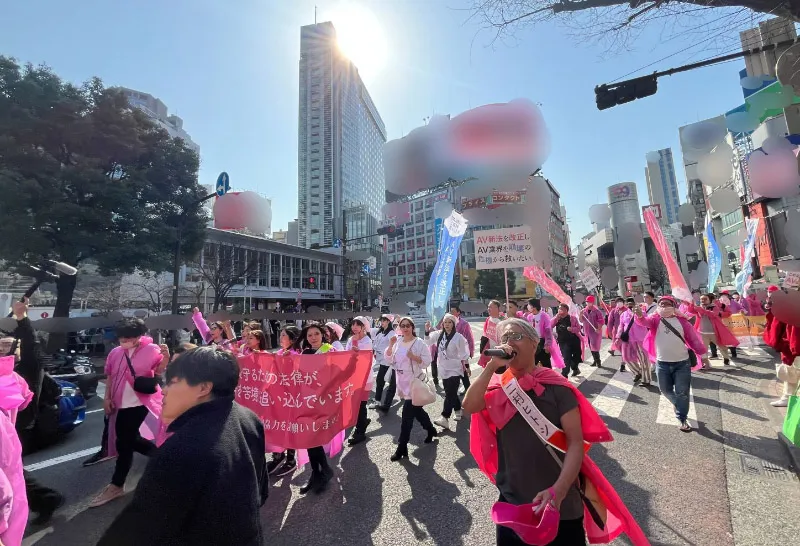
The movement to reform the AV New Law is gaining momentum:
- Public demonstrations
- Political discussions
- Industry-wide petitions
But whether meaningful change will happen and how quickly remains uncertain.
What is clear is this:
Japan’s AV industry is at a turning point.
And the decisions made now will define its future.
What You Can Do (Even If You Don’t Live in Japan)
If you’re reading this from outside Japan, it’s easy to assume this isn’t your fight.
But the reality is:
-Japan’s AV industry is global.
-Its performers, content, and cultural impact reach far beyond Japan.
And right now, many of the people inside that industry are asking for support.
Here’s how you can actually help.
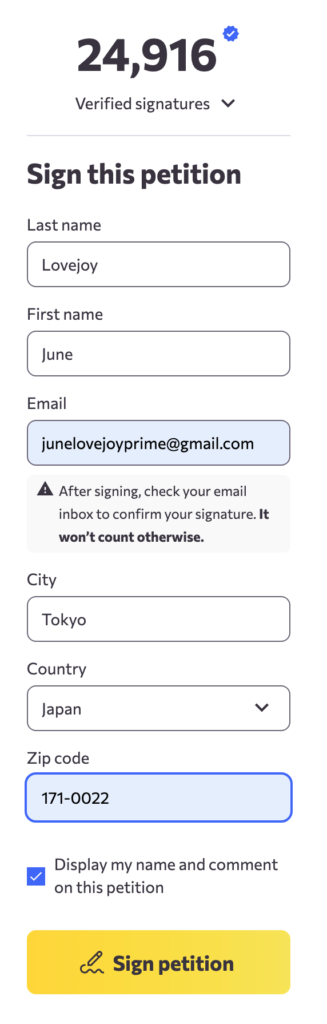
1. Sign the Petition (Yes, Even Overseas)
There is an active petition calling for reform of the AV New Law:
“Save the AV Industry from Collapse — Reform the AV Law”
You do not need to be Japanese to sign.
You can even sign using a nickname or pseudonym.
This matters more than you might think.
The goal is to show:
- International awareness
- Public interest
- That this is not just a “domestic issue,” but a global cultural one
If enough voices are gathered, it gives lawmakers leverage to push for revision.
2. Share Accurate Information
A lot of what’s circulating online about the Japanese AV industry is:
- Outdated
- Oversimplified
- Or completely wrong
Even now, many people still believe narratives from 10+ years ago without understanding how much the industry has changed.
By sharing:
- Articles like this
- Translations of current discussions
- Firsthand perspectives from performers
You help shift the conversation from assumptions → reality.
3. Support Performers Directly
One of the biggest impacts of the law has been:
- Fewer jobs
- Less stable income
- More risk for newcomers
If you already consume adult content, consider:
- Supporting performers directly (Fansly, Patreon, Fantia, etc.)
- Following and engaging with their content
- Respecting their boundaries and agency
- Refrain from pirating JAV content and consider supporting official sources like ZENRA.
4. Stop Treating Performers as “Victims by Default”
One of the most frustrating things performers have expressed is this:
Being labeled as a victim (without consent) can be just as harmful.
Many people in the industry:
- Chose this work
- Take pride in it
- Want better conditions, not elimination
You can help by:
- Listening to performers themselves
- Avoiding blanket assumptions
- Recognizing sex work as work
5. Pay Attention to What Happens Next
This situation is still evolving.
There are:
- Ongoing political discussions
- Proposed amendments
- Public demonstrations and industry actions
The law was supposed to be reviewed by 2024, but meaningful reform is still pending.
Final Thoughts from June Lovejoy
This isn’t a simple “good law vs bad law” situation.
It’s a case study in what happens when:
- Policy is made without fully understanding an industry
- Protection is implemented without flexibility
- And the people most affected aren’t properly heard
If you care about:
- Freedom of expression
- Ethical adult production
- Or simply understanding Japan beyond surface-level stereotypes
Then this is worth paying attention to.
Because right now, the people inside the industry are saying:
“Listen to us.”
Additional notes:
The official website for the “AV Industry Optimization Committee” provides limited English-language information, but it is still worth reading, referencing, and monitoring.
The committee’s self-given English title is “Associate to Consider the Appropriation of the AV Industry”; the owner of TokyoLoveDistrict and former JAV-industry member, June Lovejoy, believes that “AV Industry Optimization Committee” is a more cohesive term to describe the group. This is strictly a personal translation choice, and both can be used interchangeably.
The committee’s official Twitter/X account.


